Bone broth has become popular again, but it isn’t new. Long before collagen powders and trendy supplements, bone broth was a staple in kitchens around the world. What makes it special isn’t just protein — it’s the unique combination of bone broth collagen and minerals released when bones are simmered slowly over time.
Table of Contents

What Makes Bone Broth Different From Regular Broth or Stock?
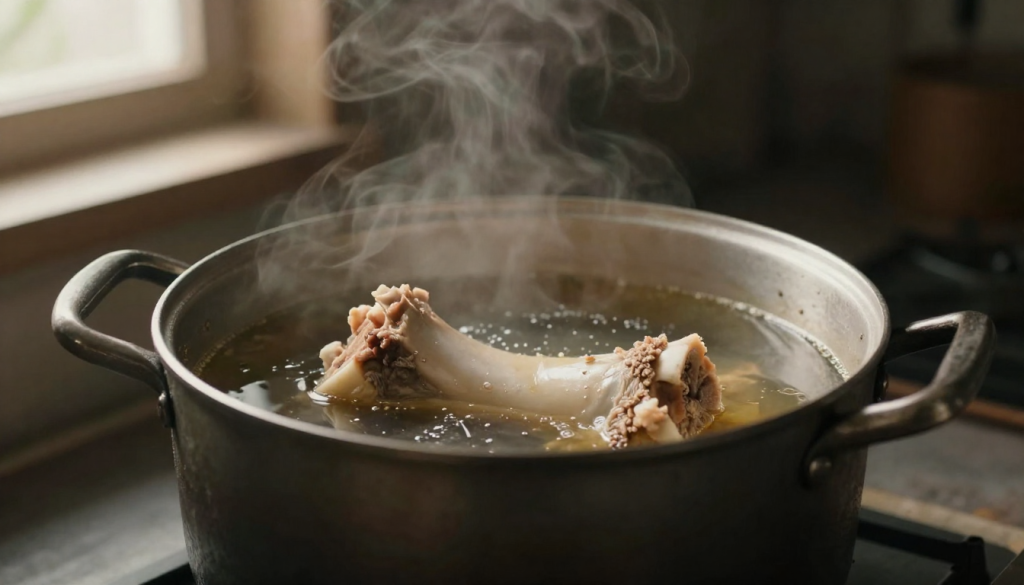
Bone broth is made by simmering bones for an extended period of time, typically 12 to 48 hours. This long cooking process allows collagen, gelatin, amino acids, and minerals to slowly release into the liquid. Regular broth or stock, on the other hand, is usually cooked for a much shorter time and focuses more on flavor than nutrient extraction.
The result is a broth that is richer, thicker, and more nutrient-dense — often noticeable by the way it gels once cooled.
Understanding Collagen in Bone Broth
Collagen is the most abundant protein in the human body, playing a key role in skin elasticity, joints, connective tissue, and gut health. When bones are simmered over time, collagen breaks down into gelatin, which gives bone broth its signature body and rich mouthfeel. According to the Harvard T.H. Chan School of Public Health, collagen is a structural protein found in connective tissue and contributes to overall tissue strength and integrity.
Unlike collagen powders, bone broth provides collagen in a whole-food form, alongside other naturally occurring compounds like glycine and proline. These amino acids support satiety and help explain why a cup of bone broth can feel deeply satisfying, even with minimal calories.
When collagen is extracted together with naturally occurring minerals from the bones, bone broth becomes more than a protein source — it becomes a nourishing, traditional food that supports the body as a whole.

The Role of Minerals in Bone Broth
Collagen often gets all the attention, but minerals are an equally important part of what makes bone broth so nourishing. As bones simmer, small amounts of minerals are released into the broth, including calcium, magnesium, phosphorus, and potassium.
These minerals support hydration, muscle function, and overall electrolyte balance. For those following a keto or low-carb lifestyle, this mineral content can be especially helpful, as lower carbohydrate intake often increases the body’s need for electrolytes.
This balance of bone broth collagen and minerals is what makes slow-simmered broth especially supportive during low-carb and keto eating.
Why Homemade Bone Broth Matters
Not all bone broth is created equal. Many store-bought options are cooked quickly, diluted, or enhanced with added collagen instead of extracting nutrients naturally from bones. While they may list collagen on the label, they often lack the full spectrum of minerals and gelatin that come from long simmering.
Homemade bone broth gives you complete control over the ingredients, cooking time, and quality of bones used. The difference is often visible — homemade broth typically gels when chilled, a sign that collagen and gelatin were properly extracted.
Unlike many commercial options, homemade bone broth preserves both collagen and minerals in their natural ratios, rather than isolating one nutrient at the expense of the other.
How to Maximize Collagen and Mineral Extraction
A few simple techniques can dramatically improve the quality of your bone broth. Using a mix of bones — especially joints, knuckles, feet, or marrow bones — increases collagen content. Adding a small amount of acid, such as apple cider vinegar, helps draw minerals out of the bones during cooking.
Longer simmer times, gentle heat, and minimal agitation all contribute to a richer, more nutrient-dense broth. Aromatics like ginger, onion, and garlic can be added for flavor without interfering with nutrient extraction.
Bone Broth for Keto, Low-Carb, and Fasting
Bone broth fits naturally into keto and low-carb lifestyles because it provides protein, electrolytes, and warmth without significant carbohydrates. Many people sip bone broth during fasting windows to support hydration and help reduce hunger without causing noticeable blood sugar spikes. The Cleveland Clinic notes that electrolytes like sodium and potassium play an important role in fluid balance and muscle function, which can be especially helpful when carbohydrates are reduced.
Its combination of gelatin-rich proteins and naturally occurring minerals supports energy levels, digestion, and overall comfort during dietary transitions, making bone broth a practical and comforting option for keto and fasting routines. For a more personalized approach, you can use our macro calculator to determine how bone broth fits into your daily keto targets.
How to Use Bone Broth Daily
Bone broth doesn’t need to be complicated. It can be sipped warm on its own, used as a base for soups and stews, or incorporated into cooking instead of water or boxed broth. Even one cup a day can make a noticeable difference in how satisfying meals feel.
Because it’s gentle and savory, bone broth often becomes a daily ritual rather than just another recipe.
Final Thoughts: Bone Broth as Nourishment, Not a Trend
Bone broth isn’t a shortcut or a supplement — it’s a traditional food that delivers connective tissue nutrients and trace minerals, the way nature intended.
If you’re looking for a simple, comforting way to support your body while eating keto or low-carb, bone broth is one of the most timeless places to start.
When you focus on bone broth collagen and minerals, you’re choosing nourishment that supports your body in a simple, traditional, and deeply satisfying way.